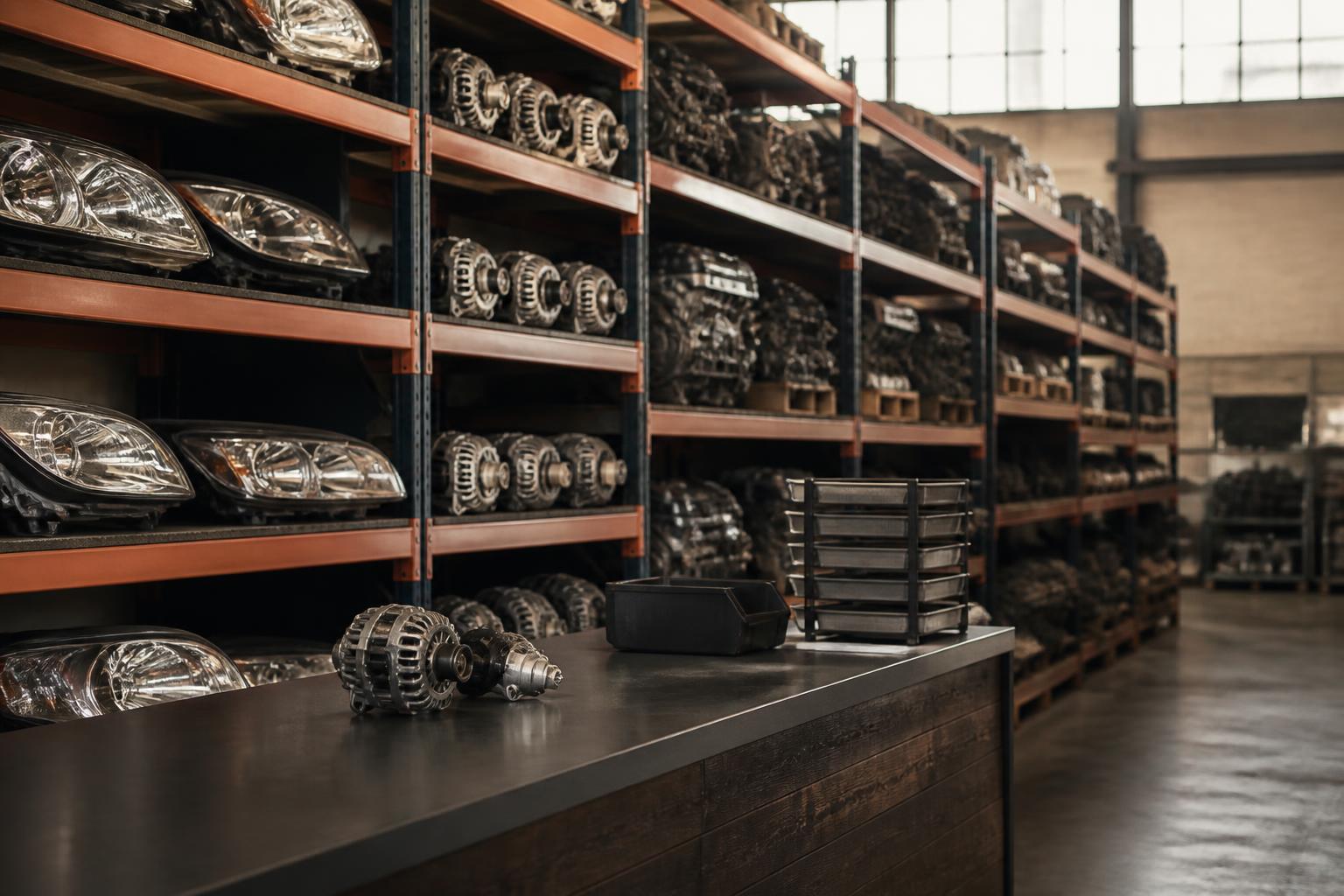
If you drive an older car or a model that's expensive to fix with brand-new parts, second-hand spares are often the smart way to keep it on the road. A good used part can cost a fraction of a new one and still give you years of reliable service. But the second-hand parts market in Gauteng is a mixed bag — alongside honest scrap yards and proper strippers, there are chancers who'll happily take your money for a part that doesn't fit, doesn't work, or never arrives at all.
This guide walks you through how the used parts trade actually works, how to make sure you buy the right part the first time, and the warning signs that tell you to walk away. The aim is simple: spend less, avoid the scams, and get your vehicle sorted without the headache.
Where Second-Hand Car Parts Actually Come From
Knowing where used parts originate helps you judge whether a seller is legitimate. In South Africa, most genuine second-hand spares come from a handful of sources:
- Scrap yards and salvage yards: Vehicles written off after accidents, floods, or age are stripped for usable components. Body panels, lights, interior trim, and mechanical parts are pulled, cleaned, and shelved.
- Vehicle strippers (dismantlers): These specialise in breaking down specific makes or models, so they tend to have deep stock for popular cars and a better idea of what fits what.
- Insurance write-offs: A car that's uneconomical to repair often has perfectly good parts. A bumper bar from a rear-end collision, for example, may be flawless.
- Trade-ins and end-of-life vehicles: High-mileage cars that are no longer worth running still hold value in their individual components.
A reputable supplier is upfront about where a part came from and what condition it's in. If a seller is cagey about the source, treat that as your first warning sign. You can browse the range of components a proper supplier carries on our used car parts catalogue to get a feel for what's typically available.
How to Make Sure a Part Actually Fits Your Car
The single biggest reason second-hand parts go wrong is fitment. The same model can have several engine variants, facelifts, and trim levels, and a part that looks identical may have different mounting points or electronics. Before you buy, confirm fitment using one or more of these:
- Your VIN (chassis number): The 17-character Vehicle Identification Number is the most precise way to identify your car. It's stamped on the chassis, shown on the licence disc, and on a plate usually found at the base of the windscreen or inside the driver's door frame. A good supplier can decode it to confirm the exact variant.
- Your registration number: In many cases a supplier can look up the make, model, and year from your reg, which narrows things down quickly.
- The original part number: If you can read the part number off the component you're replacing (often moulded or stamped into it), that's the gold standard — it matches like for like.
- Make, model, year and engine size: At a minimum, give the seller all four. "A bumper for a Polo" is not enough; "a front bumper for a 2016 Polo 1.4 TSI Comfortline" is.
When in doubt, send a clear photo of the old part alongside these details. A supplier who knows their stock will tell you straight whether they can match it — and a careful buyer always asks before money changes hands. When you're ready, request a parts quote and include your VIN so fitment is confirmed before you pay anything.
Red Flags: How to Spot a Second-Hand Parts Scam
Most sellers are honest, but the ones who aren't tend to follow a pattern. Watch for these warning signs:

- No physical address: A genuine scrap yard or stripper has a yard you can visit. If there's no address and no way to see the operation, be careful.
- Full payment demanded upfront, before you've seen anything: Especially over EFT to a personal account with no invoice. Legitimate suppliers are happy to send photos and a proper quote first.
- Won't confirm fitment: If a seller brushes off your VIN or reg and just says "it'll fit," they either don't know or don't care.
- No warranty or returns: Reputable used-parts dealers stand behind mechanical and electrical components with at least a short warranty. "Sold as is, no comebacks" on an engine or gearbox is a gamble.
- A price that's far below everyone else: If five suppliers quote in a similar range and one is a third of the price, ask yourself why. It's often a part that's faulty, stolen, or doesn't exist.
- Cellphone-only contact with no landline, email, or business presence: Anonymous sellers are hard to hold accountable.
- High-pressure tactics: "Pay now or you'll lose it" is designed to stop you doing your homework.
None of these on its own proves a scam — but two or three together is a clear signal to walk away and buy elsewhere.
What a Reputable Used-Parts Supplier Does Differently
The good operators in this trade share a few habits that make them easy to spot. A supplier worth dealing with will:
- Ask for your VIN, registration, or part number and confirm fitment before taking payment.
- Send clear photos of the actual part you're buying — not a stock image.
- Provide a proper quote and invoice with a business name and contact details.
- Offer a warranty on mechanical and electrical parts so you're covered if something's wrong.
- Have a real premises and stock you can ask about or come and see.
- Give honest advice — including telling you when a new part is the better buy, or when a part simply isn't worth fitting.
That's the standard we hold ourselves to at Midrand Spares. We serve drivers and workshops right across Greater Gauteng — if you're nearby, our Midrand branch handles enquiries for the whole region, with fitment checked against your vehicle before anything is paid for.
How to Request a Quote the Smart Way
Getting an accurate quote quickly comes down to giving the supplier everything they need in one go. To save yourself the back-and-forth, include:
- The part you need (be as specific as you can — "right-side headlight," "alternator," "front bumper").
- Your vehicle's make, model, year, and engine size.
- Your VIN or registration number for exact fitment.
- The original part number if you have it.
- A photo of the old part, if possible.
- Whether you need delivery or will collect.
With those details, a good supplier can confirm availability, fitment, and price without guesswork — and you avoid the number-one trap of buying a part that doesn't fit.
The Bottom Line
Second-hand car parts are one of the best ways to keep a car running affordably in Gauteng — provided you buy carefully. Know where parts come from, always confirm fitment with your VIN or reg, watch for the red flags, and deal with a supplier who confirms before they charge and stands behind what they sell.
If you're after a used part for any make or model, send us your vehicle details and we'll confirm fitment and pricing before you pay a cent. Get your free parts quote and let's get the right part to you the first time.